How to keep your little ones safe around water

Splish, splash and smile with peace of mind. Here’s how to keep your little water explorers safe when making the most of the sunny days by the pool or beach.
Life with little ones is full of surprises, some sweet, some stressful. As a parent, you’ve probably learned that it’s always better to be safe than sorry —and that’s especially true when it comes to water. Pools, beaches, dams, rivers and even the backyard sprinkler offer endless fun for kids, but they also come with risks that can’t be ignored. That’s why a little preparation goes a long way. By knowing the dangers, putting the right safeguards in place and staying alert, you can make every splash safe and every day out worry-free.
Little ones, big risks
Babies and toddlers might be small, but their vulnerability is huge. Their little head is heavy for their body, their motor skills are still developing, and they haven’t learned to recognise danger — yet their curiosity often pulls them straight towards it. A bit of water play can quickly turn risky: infants and toddlers lose heat fast, they can’t lift themselves out if they fall in, and they don’t have the breath control to keep water out of their lungs.
Beyond the threat of drowning, young children are also at risk of injuries from slips, falls or sharp objects, and waterborne illnesses. Understanding these dangers is the first step in keeping your little ones safe while still letting them enjoy the fun of summer water play.
Biggest threat of all
The toddler years come with a greater drowning risk than any other stage of childhood. Water safety is crucial for all ages, but for toddlers the odds are against them.
Drowning is the leading cause of injury death in children aged to 4, and according to the World Health Organisation, it is the “fourth leading cause of death for children aged 2-4 years and the third leading cause for those aged 5-14 years”.
What makes it even more alarming is how quickly it can happen. A young child can drown in as little as 5cm of water (say, in a bucket or bath tub) and it often occurs silently.
The biggest threat is unexpected, unsupervised access to water, whether it’s swimming pools, hot tubs, bath tubs or natural bodies of water like ponds or streams. Shockingly, 69% of all drownings among children aged 4 and younger happen during non-swim times, highlighting the need for constant vigilance.
Different waters, different rules
The American Academy of Pediatrics advises using multiple “layers of protection” to reduce water risks.
- At pools, install a four-sided fence with a self-latching gate, and consider a cover or alarm to block unsupervised access.
- At the beach, make sure there are lifeguards on duty, and pay attention to ocean currents and conditions.
- During bath time, never step away, and drain the tub immediately after use.
- In backyards, empty kiddie pools, tubs and buckets promptly and secure ponds with fencing or gates.
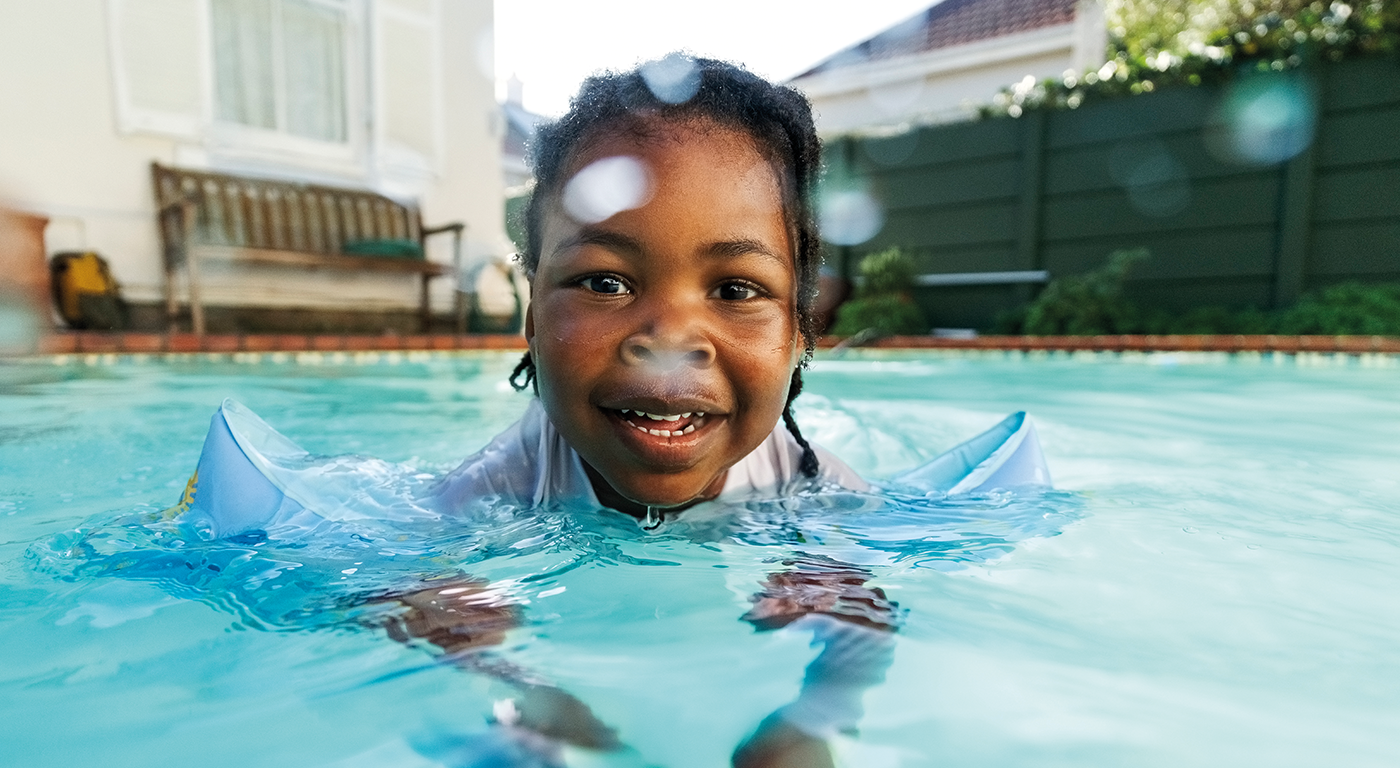
- Know that inflatable toys and water wings are not safety devices. Non-swimmers should wear life jackets.
- Early swimming lessons can build confidence — the best age for a child to learn to swim is between one and four.
With these measures in place, children can enjoy the water with greater freedom and safety.
Being prepared for an emergency is just as important as prevention. Keeping a phone, rescue equipment and a well-stocked first-aid kit nearby can make all the difference in a crisis.
CPR is also a crucial and essential skill that all parents should know. According to ER24, “Knowing how to perform mouth-to-mouth ventilation is especially important in drowning emergencies as the main cause of cardiac arrest is often due to hypoxia (low levels of oxygen) and not a heart issue.”
The power of active supervision
Swimming lessons, pool fences and flotation devices can support safety, but they do not replace vigilant supervision.
According to Royal Life Saving, “Active supervision means focusing all of your attention on your children all of the time when they are in, on or around the water. Parents need to be within arm’s reach, interacting with children and ready to enter the water in case of an emergency.”
Drowning can happen quickly and silently, often without splashing or noise, so young children and non-swimmers need ‘touch supervision’, while older swimmers still need close visual attention.
Adults must remain fully focused, free from distractions like phones or socialising. In group settings, a system like the ‘Water Watcher’, where a sober adult monitors children for a set period before rotating, helps to avoid assumptions about who’s watching.
Water safety isn’t only about caution —it’s also about creating joyful, carefree moments. By setting clear rules, using age-appropriate safety gear and supervising closely, you can give your children the freedom to swim, explore and build confidence in the water without unnecessary restrictions. The goal is balance: peace of mind for you, and plenty of fun for them.
Words: Aneliswa Kunene
Photography: Gallo/Getty images
Related articles
Latest Jet club magazine
We’ve got the latest trends, exciting prizes and exclusive savings just for you!
Jet Club will not pass your details to anyone else. By clicking the subscribe button you confirm you have read and agree to the Jet Club Terms and conditions and Jet Club Privacy Statement.
Subscribe